Case Page EU PAY TRANSPARENCY
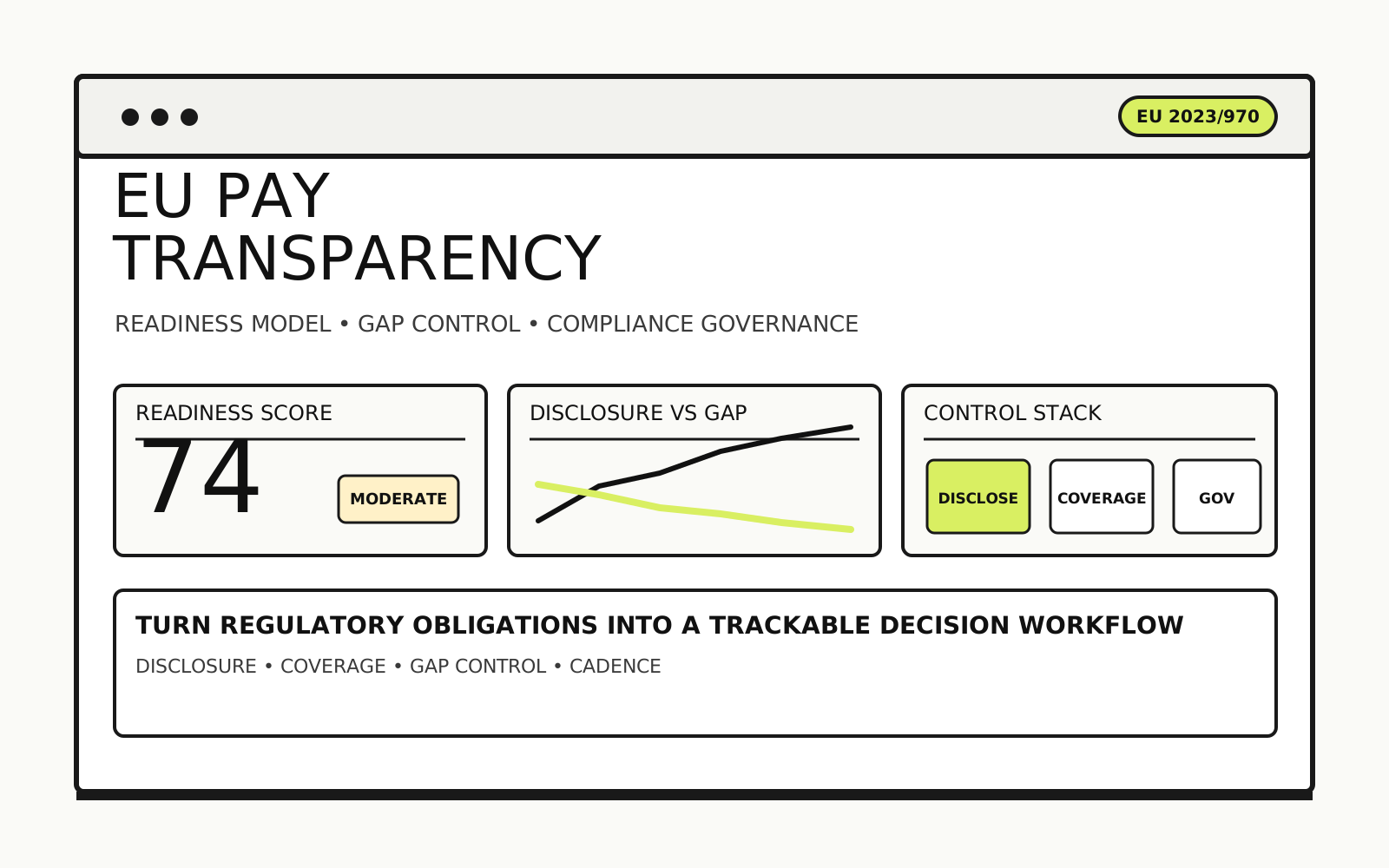
This case translates Directive (EU) 2023/970 into a practical readiness model with measurable controls, risk interpretation, and action sequencing.
2025-2026 | Compliance | HR Analytics
EU Pay
This case translates regulation requirements into operational readiness scoring so HR teams can prioritize disclosure, data quality, and remediation before deadlines.
Background
Teams often track pay-transparency obligations in policy documents, but execution readiness remains unclear. The operational gap usually comes from fragmented data, unclear ownership, and inconsistent reporting cadence.
The Question
How can HR teams convert regulation requirements into a visible readiness score that supports practical governance decisions?
Method
Dashboard View
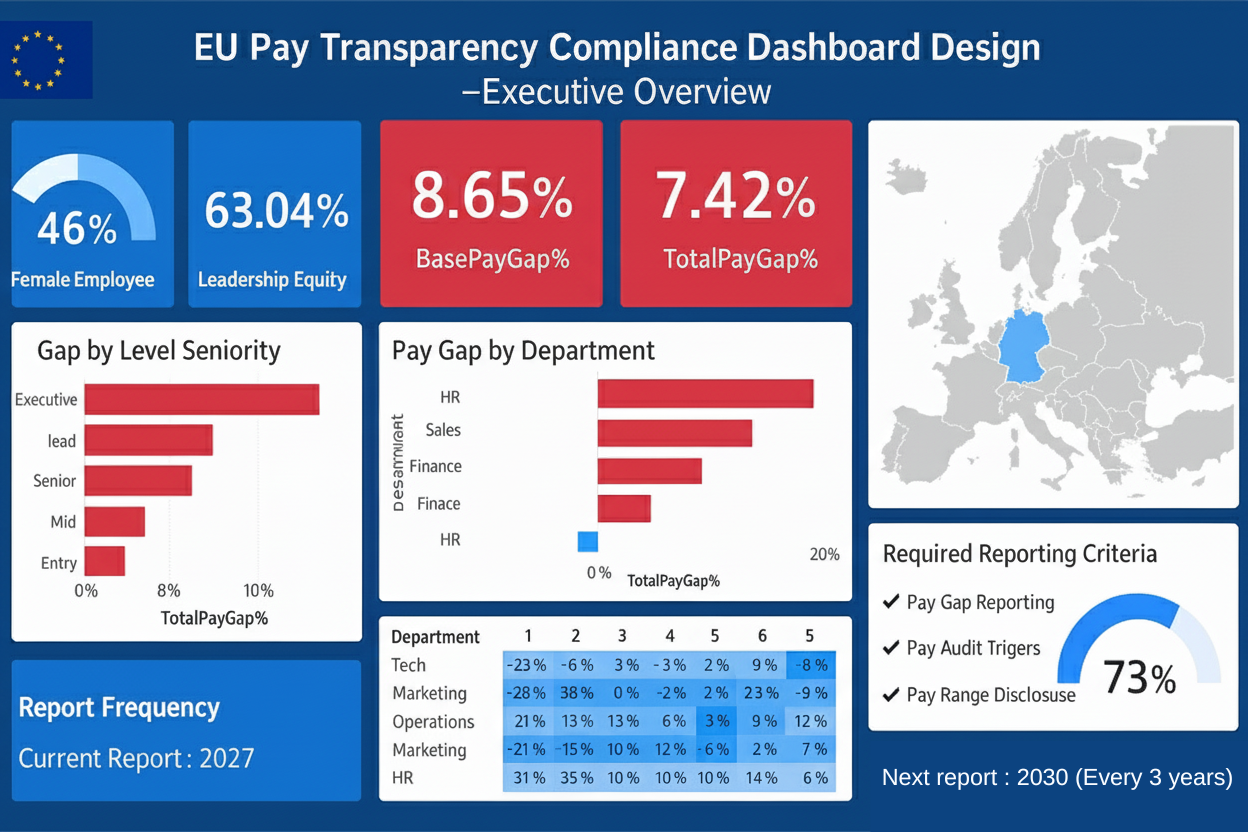
Displayed values are synthetic/demo values; structure reflects real compliance workflow logic.
Readiness Model
Readiness Score = 40% Disclosure + 30% Data Coverage + 20% Gap Control + 10% Governance Cadence
Data Structure
| Dataset | Main Fields | Use Case |
|---|---|---|
| Employee | gender, grade, department, base, bonus, location | Gap and parity cuts |
| Jobs | posting id, function, country, disclosed range | Transparency monitoring |
| Rules | size band, frequency, threshold logic | Obligation and review cadence |
Scenario Simulator
62%
84%
7%
75%
74
Moderate RiskIncrease salary range disclosure first, then target high-gap departments.
Key Insights
- Readiness becomes easier to govern when KPIs are weighted and visible in one frame.
- Disclosure improvements often drive the fastest near-term score increase.
- Gap remediation needs to be sequenced with data quality and governance cadence.
Practical Next Steps
- Operationalize ownership by cycle milestones (data close, review, sign-off).
- Add exception logs and approval traceability for audit readiness.
- Extend model from pilot entities to full-country scope.
EU 2023/970 Readiness Scoring Compliance Governance HR Decision Support